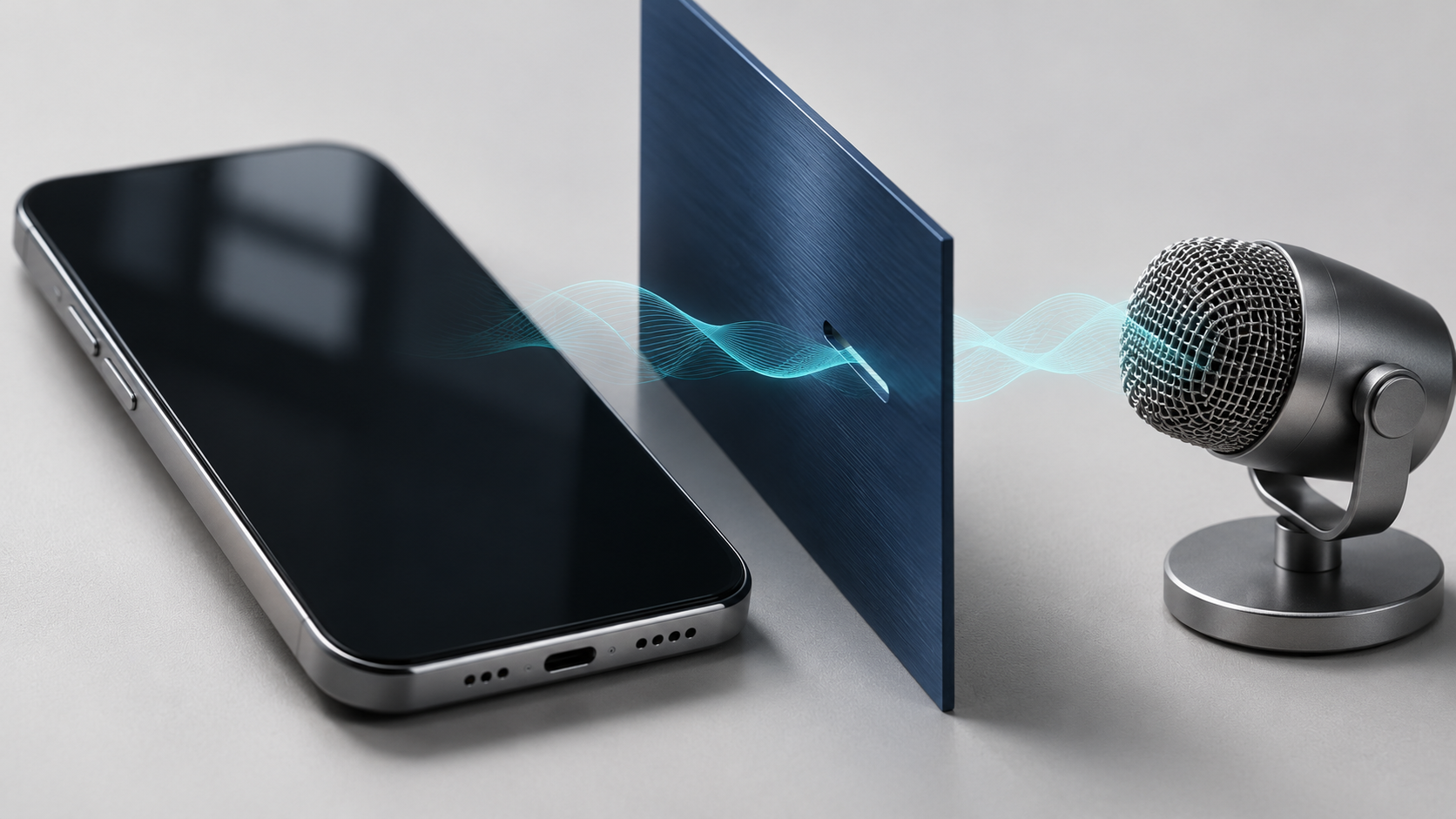
Critical Flaw in iOS Allowed Audio Recording by Apps Even with Permission Denied
A logic flaw in Apple's audio service allowed applications on iPhones and iPads to record audio even after the user denied microphone permission. The vulnerability, CVE-2026-65339, was fixed in security updates released starting in August 2026.
Security researchers detailed a serious privacy flaw that affected Apple devices, including iPhones and iPads. The vulnerability, tracked as CVE-2026-65339, resided in the operating system's audio service and allowed malicious or compromised applications to record the user's sound environment, even when microphone permission had been explicitly denied. Fixes for this issue were implemented by Apple in a series of security updates released starting August 17, 2026.
The discovery was attributed to two independent researchers: Nik Tsytsarkin, from Meta Red Team X, and Mustafa Calap, a security engineer known as ordinal0. Both published their detailed technical analyses in the same week, in November 2026. Although the exact dates of communicating the flaw to Apple differ among sources – with some indicating July 7, 2026, as a joint report and others mentioning July 31, 2026, for Calap's report – Apple acknowledged both researchers for the discovery. There are no reports of the flaw being actively exploited in real-world attacks before its correction.
How the Logic Flaw Bypassed Privacy
The essence of the vulnerability resided in a logic flaw in Apple's audio service, known as audiomxd. This service, responsible for managing microphone access, did not properly verify the identity of the process requesting the recording. Instead, it took the application's own word on which process was making the request.
A malicious application could send the audio service an "audit token" that identified it as audiomxd itself. By impersonating the audio service, the application was able to bypass Apple's Transparency, Consent, and Control (TCC) system, which is responsible for managing privacy permissions. In this way, audiomxd treated the application as if it were one of its own internal operations, allowing recording without the need for user permission. The operating system kernel provided the necessary details for the application to perform this impersonation.
Usage Indicators and Exploitation Conditions
Normally, on iPhones, an orange indicator appears in the Dynamic Island or Control Center when an application is using the microphone. However, in some of the researchers' initial test builds, this indicator remained off while audio was being recorded, making the activity even more stealthy. Mustafa Calap, in his tests, confirmed that the orange indicator did not appear, even with active recording and permission denied. Nik Tsytsarkin noted that, in a later test build, the orange indicator was restored.
For the exploitation to occur, the application needed to already be installed on the device. Tests showed that recording had to be initiated while the application was in the foreground, but once started, it could continue even after the application was sent to the background or the device was locked. The test applications used by the researchers were "sandboxed" applications without additional privileges, indicating that the flaw did not require elevated permissions beyond those of a standard application.
Security Updates and Affected Devices
Apple implemented fixes for CVE-2026-65339 in various operating system updates. The first public fixes were released on August 17, 2026, with iOS 26.6.1 and iPadOS 26.6.1, covering iPhone 11 models and later, as well as various generations of iPad Pro, Air, and mini. Other important updates included:
- iOS 18.7.11 and iPadOS 18.7.11: Released on October 26, for older models such as iPhone XS, XS Max, XR, and 7th-generation iPad.
- macOS Tahoe 26.6.2: Released on August 17.
- macOS Sequoia 15.8: Released on September 14.
- tvOS 27, watchOS 27, and visionOS 27: Released on September 14, covering Apple TV 4K, Apple Watch Series 9, and Apple Vision Pro.
The fix implemented by Apple ensures that the audio service now verifies the real identity of the caller, which is provided by the kernel. Additionally, for any attempt to override the client's identity, a new private "entitlement" (com.apple.private.audio.client-audit-token-override) is required, which a common application cannot grant to itself.
Despite the severity of the flaw, Apple described it in its security notes only as an issue that "may allow an an application to leak sensitive user information," without explicitly mentioning audio recording with denied permission. CISA (the U.S. Cybersecurity and Infrastructure Security Agency) assigned the flaw a CVSS score of 5.0 (Medium), and it was not listed in the agency's catalog of known and actively exploited vulnerabilities.
The main recommendation for users is to keep their Apple devices always updated with the latest operating system versions to ensure protection against this and other vulnerabilities.
CyberX Technical Analysis
The CVE-2026-65339 vulnerability represents a logic flaw in Apple's audio subsystem, specifically in the audiomxd service, which is crucial for microphone management and other audio operations. The exploitation of this flaw did not rely on a memory corruption vulnerability, but rather on an error in the identity validation logic within the service.
Exploitation Mechanism and Conditions
The attack exploited the implicit trust of the audiomxd service. When an application requested microphone access, audiomxd was supposed to query the TCC (Transparency, Consent, and Control) system to verify user-granted permissions. However, the flaw allowed a malicious application to forge its identity, presenting itself to audiomxd as the audio service itself. This was possible because the operating system kernel provided the necessary details for the application to construct an audit token that mimicked audiomxd. By impersonating a legitimate internal component, the application was able to bypass TCC checks, gaining unrestricted access to the microphone.
The conditions for exploitation included:
- Application Installation: The malicious application needed to be installed on the device. The vulnerability was not remotely exploitable.
- Foreground Start: Initial recording needed to be activated while the application was in the foreground.
- Persistence: Once started, recording could continue even with the application in the background or the device locked, especially if the application declared
UIBackgroundModes = audio. - Sandbox: Tests were conducted with sandboxed applications, without additional entitlements, which demonstrates the severity of the flaw, as it did not require special privileges beyond those of a common application.
Impact and Classification
The primary impact of CVE-2026-65339 is on the confidentiality of user data. The ability to record audio without explicit permission and, in some cases, without the visual indicator, allowed for the surreptitious collection of sensitive information from the user's environment. There is no indication of impact on system integrity or availability.
The CVSS 3.x rating of 5.0 (Medium) reflects the need for user interaction (application installation) and local access (AV:L/AC:L/PR:L/UI:R). High confidentiality (C:H) is the factor that raises the score, while the absence of impact on integrity and availability (I:N/A:N) keeps it at a medium level. CWE-693 (Protection Mechanism Failure) is an appropriate classification, as the flaw lies in the breakdown of a privacy protection mechanism.
Mitigation and CyberX Recommendations
The primary and most effective mitigation is the immediate application of security updates provided by Apple. The implemented fix ensures that the audiomxd service validates the caller's true identity directly with the kernel, preventing impersonation. Furthermore, the introduction of a private entitlement (com.apple.private.audio.client-audit-token-override) for any attempt to override the client's identity strengthens security.
Recommendations:
- Urgent Update: Ensure all Apple devices (iPhones, iPads, Macs, Apple TVs, Apple Watches, Vision Pro) are updated to the versions containing the fix (iOS 26.6.1/18.7.11, iPadOS 26.6.1/18.7.11, macOS Tahoe 26.6.2/Sequoia 15.8, tvOS 27, watchOS 27, visionOS 27 or later).
- User Awareness: Educate users about the importance of installing applications only from trusted sources (App Store) and being aware of requested permissions. Although this flaw bypassed permission, installing applications from unverified sources increases overall risk.
- Monitoring: Although the flaw itself is no longer exploitable after the update, the practice of monitoring microphone usage by applications (via visual indicators or system logs, where applicable) remains a good security practice.
CyberX SOC Intelligence Bulletin
A critical logic flaw (CVE-2026-65339) in Apple's audio service allowed installed applications to record microphone audio on iOS, iPadOS, macOS, tvOS, watchOS, and visionOS devices, even after the user explicitly denied permission. This vulnerability, now patched, posed a significant risk of sensitive information leakage, as it bypassed system privacy controls.
Assets and Exposure Conditions
Affected Assets:
- iPhones (models 11 and later, XS, XS Max, XR)
- iPads (Pro 12.9-inch 3rd gen+, Pro 11-inch 1st gen+, Air 3rd gen+, 8th gen+, mini 5th gen+, 7th gen)
- Macs (with macOS Tahoe and Sequoia)
- Apple TV (4K 2nd gen+)
- Apple Watch (Series 9+)
- Apple Vision Pro (all models)
Exposure Conditions:
- Devices running operating system versions prior to the patched ones.
- Installation of an application that exploited the flaw (did not require elevated privileges beyond the standard sandbox).
- The exploitation was not remote and required prior application installation.
Investigation and Detection Signs
Before the fix, detection was challenging due to the stealthy nature of the flaw:
- Microphone Indicator: In some test builds, the orange microphone usage indicator did not appear, making visual identification difficult. In others, it did appear.
- System Logs: In older builds, system logs did not attribute microphone usage to the exploiting application, but rather to the audio service itself (
audiomxd), masking the activity.
Post-fix: The primary detection measure is checking the operating system version. Any device running a version older than those listed below is potentially vulnerable.
Fixes and Mitigation
Apple released security updates to fix CVE-2026-65339. The most effective mitigation is the immediate application of these updates:
- iOS and iPadOS: 26.6.1, 18.7.11 or later.
- macOS: Tahoe 26.6.2, Sequoia 15.8 or later.
- tvOS: 27 or later.
- watchOS: 27 or later.
- visionOS: 27 or later.
Mitigation Recommendations:
- Software Update: Implement strict update policies for all Apple devices in the organization.
- Application Management: Reinforce the policy of installing applications only from trusted sources (App Store) and with security review.
- User Education: Educate users about privacy risks and the importance of keeping systems updated.
MITRE ATT&CK
- T1123 - Audio Capture: This is the primary technique directly exploited by the vulnerability, allowing an adversary to record audio from the device's microphone.
- T1068 - Exploitation for Privilege Escalation: While not a root privilege escalation, an application's ability to bypass the privacy permission system (TCC) to access a protected resource (microphone) without consent can be classified as a form of privilege escalation for the specific resource.
Indicators of Compromise (IoCs)
No verifiable indicators of compromise (hashes, IPs, domains) were identified in the consulted sources that could be used for post-exploitation detection of this specific vulnerability. The nature of the flaw (internal logic) and the absence of in-the-wild exploitation limit the availability of traditional IoCs.
Response and Evidence Preservation
In case of suspected compromise before applying the fixes:
- Isolation: Disconnect the device from the network to prevent additional data exfiltration.
- Update: Immediately apply security updates.
- Forensic Analysis: Perform a forensic analysis of the device to identify suspicious applications, check system logs (if available and relevant to the affected version), and look for evidence of unauthorized audio recording.
- Permission Review: Review permissions granted to all installed applications, even if the flaw bypassed TCC.
Frequently asked questions
What was CVE-2026-65339?
CVE-2026-65339 was a critical logic flaw in Apple's audio service (audiomxd) that allowed applications on iPhones and iPads to record audio even when microphone permission was explicitly denied by the user.
Which Apple devices were affected by this vulnerability?
The vulnerability affected iPhones, iPads, and other Apple devices running older versions of iOS, iPadOS, macOS, tvOS, watchOS, and visionOS.
How did the flaw allow apps to record audio without permission?
The flaw allowed a malicious application to impersonate Apple's audio service (audiomxd) itself, bypassing the Transparency, Consent, and Control (TCC) system responsible for managing privacy permissions.
When was the fix for CVE-2026-65339 released?
Apple implemented fixes for CVE-2026-65339 starting August 17, 2026, with the release of iOS 26.6.1 and iPadOS 26.6.1, and subsequent updates for other operating systems.
How can users protect themselves from this type of vulnerability?
The main recommendation for users is to keep their Apple devices always updated with the latest operating system versions to ensure protection against this and other vulnerabilities.


