Cold Relic Russian group hackers compromise second U.S. organization using stolen Google Workspace data
The Russian espionage group Cold Relic reused super‑admin credentials from Google Workspace obtained in 2025 to infiltrate another U.S. company, exploiting MFA and passkeys.
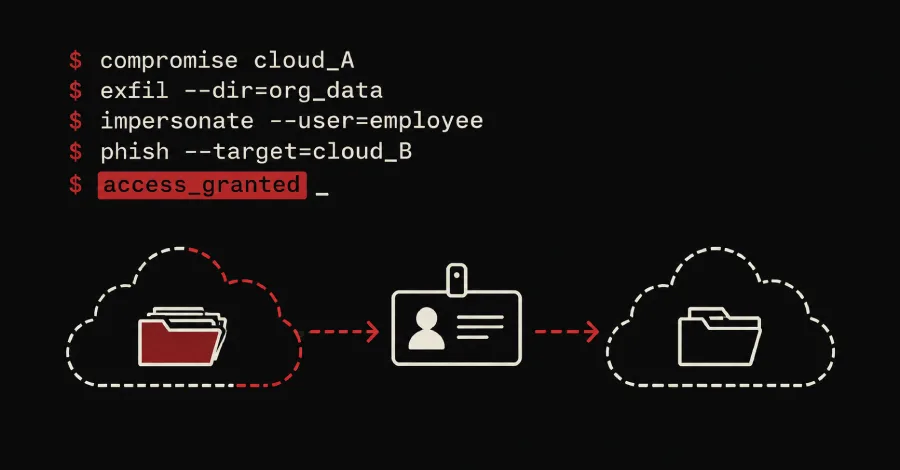
The Russia-linked cyber espionage group known as Cold Relic (formerly COLDRIVER and UNC4057) used data stolen from a Google Workspace compromise in 2025 to breach a second organization in the United States.
Abuse of super-admin credentials and MFA
According to the Google Threat Intelligence Group (GTIG), the attacker first compromised the super-admin account of a U.S. company in late 2025. Access was obtained using a residential proxy near the target and an MFA notification fatigue attack, which prompted the victim to approve an authentication request.
With the super-admin account in hand, the actor registered their own MFA device within the tenant, ensuring persistence even after the compromised account was removed. The group also used passkeys and MFA backup codes as alternative access mechanisms.
Massive data theft via Google Takeout
Using super-admin privileges, the attackers downloaded the entire contents of the organization's cloud storage, sharing files to an email address controlled by Cold Relic and conducting direct downloads. They also checked audit and Alert Center logs to erase traces of the intrusion.
The exfiltrated data included full employee lists, email directories, and strategic documents, which were exported using the Google Takeout service.
Identity abuse for subsequent attacks
Following the initial theft, the group synchronized email inboxes via OAuth to external clients, reused unrevoked passkeys, and accessed critical documents stored in the cloud. Even after being evicted from the first organization, Cold Relic continued to use compromised email accounts for social engineering campaigns targeting employees and partners.
Compromise of second organization via Microsoft Entra ID
The attack progressed to a second U.S. company that used Microsoft Entra ID as a federated identity provider for Google Workspace. Posing as an employee from the first organization, the attacker established contact through a secure messaging app and sent phishing links that captured Entra ID credentials and authentication tokens.
With the stolen credentials, the group registered a new MFA device in Entra ID, maintaining access to the compromised user and conducting bulk downloads of files stored in the second organization's cloud drive.
Impact and outlook
Google describes the campaign as a convergence of human-centric social engineering and cloud identity abuse, allowing Russian intelligence services to turn legitimate business communications into attack vectors against trusted partners.
Although the names of the affected organizations were not disclosed, the incident demonstrates the vulnerability of cloud productivity environments when high-privilege credentials are compromised and MFA defenses are bypassed.
CyberX Technical Analysis
The observed scenario reveals an identity-based compromise chain that exploits three main vectors:
- Initial compromise of super-admin credentials: the use of a residential proxy and an MFA fatigue attack indicates that the first layer of defense (MFA) was bypassed through social engineering, not a technical flaw.
- Abuse of persistent authentication mechanisms: the ability to register MFA devices, reuse passkeys, and backup codes allows the attacker to maintain access even after password revocations or session resets.
- Lateral movement via federated identity: by obtaining Google Workspace credentials, the group managed to access the second organization's Microsoft Entra ID, demonstrating the importance of segmenting and monitoring trust flows between identity providers.
Defensive recommendations:
- Implement MFA policies that limit approval of requests from unrecognized devices and require additional verification (for example, risk-based authentication).
- Immediately disable or rotate MFA backup codes and passkeys when privileged account compromise is suspected.
- Apply the principle of least privilege: restrict the scope of super-admin accounts and use service accounts with granular permissions for automated tasks.
- Monitor admin console audit logs and data export alerts (Google Takeout, drive downloads) with real-time correlation.
- Establish trust controls between identity providers (Google Workspace and Microsoft Entra ID), including reviewing authorized OAuth applications and revoking unused tokens.
- Conduct MFA fatigue attack simulations to train users to recognize suspicious requests.
These measures reduce the attack surface against high-privilege credentials and hinder the persistence of actors relying on cloud identity abuse.
CyberX SOC Intelligence Bulletin
Cold Relic demonstrated advanced capability in reusing Google Workspace super-admin credentials to gain persistent access to multiple organizations, bypassing MFA and exploiting passkeys and backup codes.
Observed indicators of compromise (IoCs)
- Registration of new MFA devices in Google Workspace and Microsoft Entra ID tenants.
- Use of OAuth for synchronizing email inboxes with external clients.
- Data export via Google Takeout from super-admin accounts.
- Modification and deletion of alerts in Google Alert Center.
- Phishing communications sent from compromised accounts in secure messaging applications.
Relevant MITRE ATT&CK TTPs
- T1078 – Valid Accounts (use of super-admin credentials).
- T1110 – Brute Force (MFA fatigue attack).
- T1566 – Phishing (sending malicious links via messaging).
- T1071 – Application Layer Protocol (use of messaging apps for C2).
- T1027 – Obfuscated Files or Information (use of passkeys and backup codes).
Operational recommendations for SOC
- Alert about new MFA device registrations on high-privilege accounts.
- Correlate data export events via Google Takeout with admin permission changes.
- Monitor unusual OAuth requests and revoke unrecognized tokens.
- Implement detection of MFA fatigue patterns (multiple requests in short intervals).
- Audit Entra ID logs for MFA device creation and user profile changes.
No additional indicators of compromise were identified in the consulted sources beyond those described above.
Frequently Asked Questions
Who is Cold Relic?
Cold Relic is a Russia‑linked cyber espionage group formerly known as COLDRIVER and UNC4057.
How did Cold Relic bypass MFA?
They used a notification fatigue attack that prompted the victim to approve an authentication request, and later registered their own MFA device, passkeys, and backup codes.
What data did the attackers exfiltrate?
Full employee lists, email directories, and strategic documents exported via Google Takeout.
How did the attackers target a second organization?
They posed as an employee from the first organization, used Microsoft Entra ID to phish credentials, and registered a new MFA device in Entra ID.


